Photo courtesy of Paul Franz
By: Phyllis M. Cahaly, CMD, Director of Partnership Marketing, Massachusetts Office of Travel & Tourism
Bucket lists. We all have them – an inventory of the experiences or achievements you wish to accomplish in your lifetime. Maybe you call it a ‘to do list’ or a ‘laundry list.’ Whatever you call it, let’s be sure that fly fishing in Massachusetts is on it.
What’s so great about fly fishing?
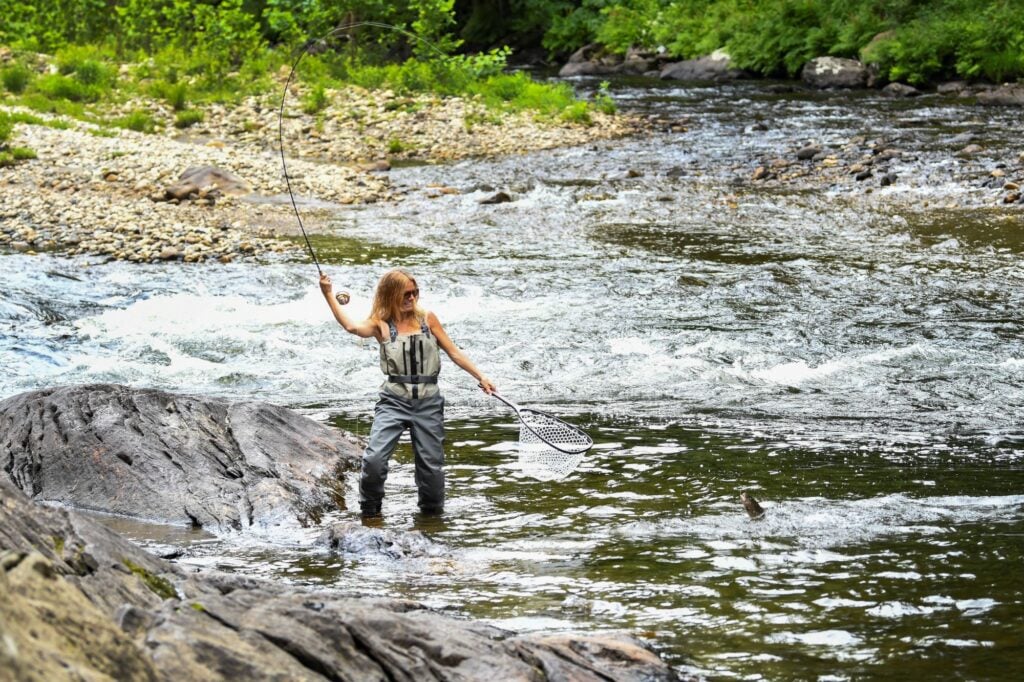
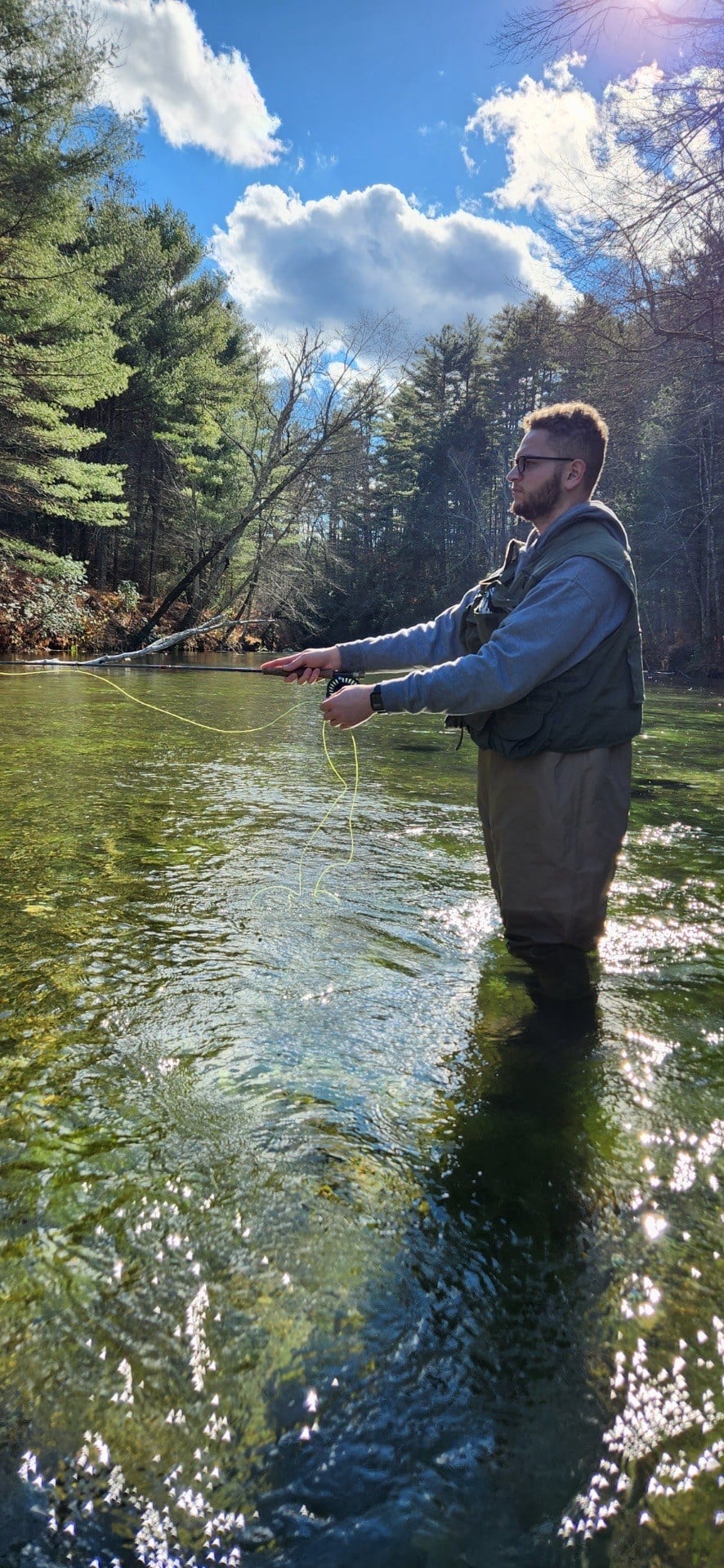
For starters, fly fishing helps to relax you physically and mentally. You’re immersed in nature, which, according to research, has a positive effect on our well-being. Sweeping views of a calm, natural setting, surrounded by the relaxing sound of moving water sets the mood, and the physical, rhythmic motion of casting can lead you to a meditative, almost trance-like state of mind.
What makes fly fishing unique?
A fly rod is different from a spinning rod, or reel. The beauty of the casting in circular motions is almost artistic in nature, creating a different experience from the spinning rod. The artificial light-weight fly is used to entice the fish, while traditional fishing uses live bait and heavy lures aimed at irritating the fish and prodding them to bite. Undoubtedly, anglers will debate the many differences between fly fishing and spin fishing – like the rod type, line type, flies versus lures, and still versus moving water. Ultimately, they will agree that the greatest similarity is that you are catching fish and enjoying the process.
Fly Fishing Seasons in Massachusetts
Fly fishing is a year-round activity in Massachusetts. Whenever you feel the urge, grab your rod and fly and hit the road.
– June – August is big bass season around Boston and Cape Cod.
– September – November, perhaps the most scenic time of year for fly fishing, yields saltwater striped bass and bluefish.
– December – January is the perfect time for big brown trout. In fact, some of the largest brown trout come from Massachusetts waters.
– March – June, look for pike, bass, and the first stripers of the season.
Each spring, MassWildlife stocks over 500,000 trout statewide in more than 220 cities and towns across Massachusetts. Be sure to visit their website to learn more about stocking dates, species, how to purchase a fishing license for those 15 or older, and other important permitting information.
Check out these popular locations around Massachusetts, while we leave you with the sage words of Henry David Thoreau, American philosopher, poet, environmental scientist and favorite son of Concord, Massachusetts: “Many go fishing all their lives without knowing that it is not fish they are after.”
Western Massachusetts

The Deerfield River in Franklin County, which runs for 76 miles from southern Vermont to the Connecticut River, is idyllic for year-round fly fishing. It’s fed by a dam, making it a “tailwater fishery” allowing for consistent temperatures and excellent fishing conditions. This river is known for its stocked selection of brown trout, rainbow trout, and brook trout.
In Lee, located in Berkshire County, the Housatonic River is an active fishing location most of the year, including catch-and-release programs and features both stocked and wild trout and brown trout.
Millers River, a 52.1-mile long river, originates in Ashburnham joins the Connecticut River downstream from Millers Falls. This river is touted as a good choice for novice fly fishers with easy access and is stocked with an abundant number of trout.
Central Massachusetts
The Swift River, is located primarily within the Quabbin Valley region and is a popular spot for both stream-born and stocked trout. The fishery hosts both cold and warm water species. The Swift River Reservation, along the east branch is managed by The Trustees of Reservation.
Squannacook River in Northern Massachusetts is a cold-water stream and flows east and southeast through Townsend and West Groton. Here you’ll find brown trout, brook trout, rainbow trout, and small mouth bass.
South of Boston
Hot spots for striped bass around Plymouth County include the “Three Bays” known as Plymouth, Kingston, and Duxbury. There are also some popular ponds too, like Big Sandy Pond or Little South Pond, both well stocked with trout.
New Bedford, known as “America’s Working Port”, is a natural choice for fishing and learning about the history of this important port. Check out the New Bedford Reservoir (Lake Street Ponds), for freshwater species like sunfish. For striped bass and scup, try your luck at the Acushnet River.
Cape Cod & The Islands
Provincetown, located at the very tip of Cape Cod, is well known for its fishing spots, particularly at the flats, which can be accessed from shore or by boat. Regular catches include striped bass and bluefish.
Chappaquiddick Island, or “Chappy,” is accessible by a quick ferry ride and is a great place to fish on Martha’s Vineyard, located just seven miles off the mainland. Cast for bluefish and striped bass, or in the fall, for tuna species like albacore and bonito. For a small island, there are many places from which to choose like Wasque Point and Cape Poge, both managed by The Trustees of Reservation.
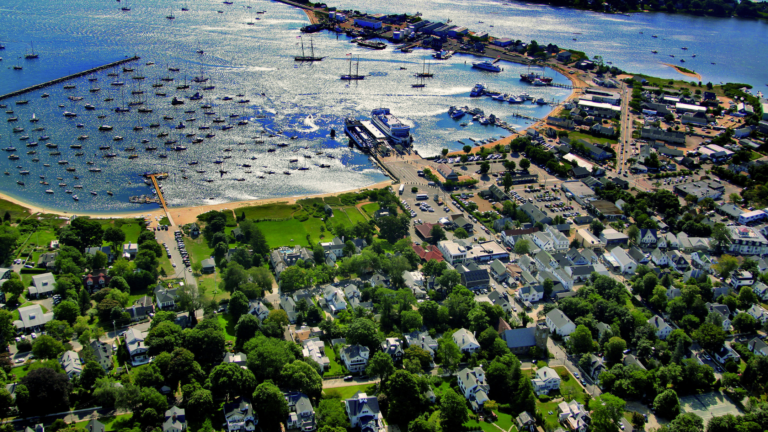
Thirty miles off the mainland, on Nantucket Island, you’ll great fly-fishing opportunities for striped bass and bluefish. Enjoy year-round fishing right off Nantucket Harbor or Great Point, with May – November being the most popular time.
North of Boston
On beautiful Plum Island, a barrier beach off the coast of Newbury and Newburyport, search out several scenic locations to fish for stiped bass, bluefish, and shad. Popular locations include Joppa Flats and the Parker River National Wildlife Refuge. Plum Island is also popular for night fishing.
Greater Boston
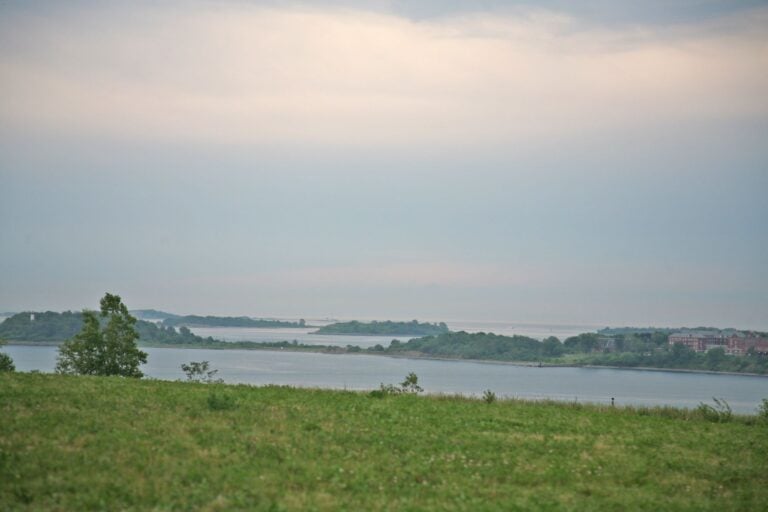
Fishing is allowed all around the Boston Harbor Islands National Recreation Area including Deer Island, Nut Island, and Spectacle Island. The waters around the islands offer a multitude of fish such as striped bass, bluefish, and flounder.
The Charles River runs from Hopkinton to Boston and is filled with a variety of fish species like bass, carp, rainbow trout, striped bass, and yellow perch.
For more information: