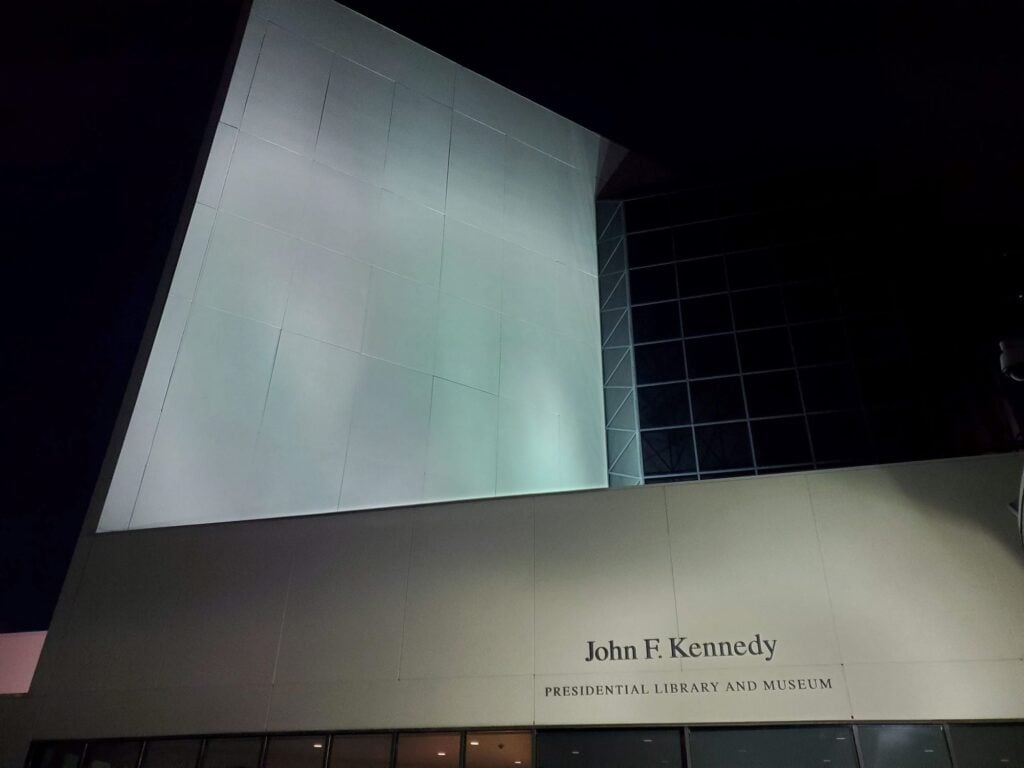
Massachusetts isn’t just where the American Revolution began – it is where history continues. As we work toward the future, we also preserve and learn from our past. At the John F. Kennedy Presidential Library and Museum in Boston, you can do both as you learn more about one of Massachusetts’ most famous families – the Kennedys.
John F. Kennedy (JFK) was born in Brookline, Massachusetts, attended Harvard University, and represented Massachusetts in the U.S. House of Representatives and the U.S. Senate before being elected the 35th President in 1960. Through artifacts, installations, and Kennedy’s own words, the John F. Kennedy Presidential Library and Museum explores the legacy of the impacts that Kennedy’s life, family, and administration have had on our world.
You can find the John F. Kennedy Presidential Library and Museum at Columbia Point in Dorchester, Boston, located within the campus of the University of Massachusetts, Boston. Many people choose to drive to the museum – there is ample parking on the museum grounds. To get there by public transit, take the Red Line to the JFK/UMass station. Exiting the station, you can follow signs to the museum along a mile-long walk, or hop on a bus.
 The museum grounds were designed by Chinese American architect I. M. Pei, who was favored by Jaqueline Kennedy for his ambition and creative ideas. It features a large, glass pavilion that overlooks Dorchester Bay, attached to a 125-foot tall concrete building. The museum was dedicated in 1979.
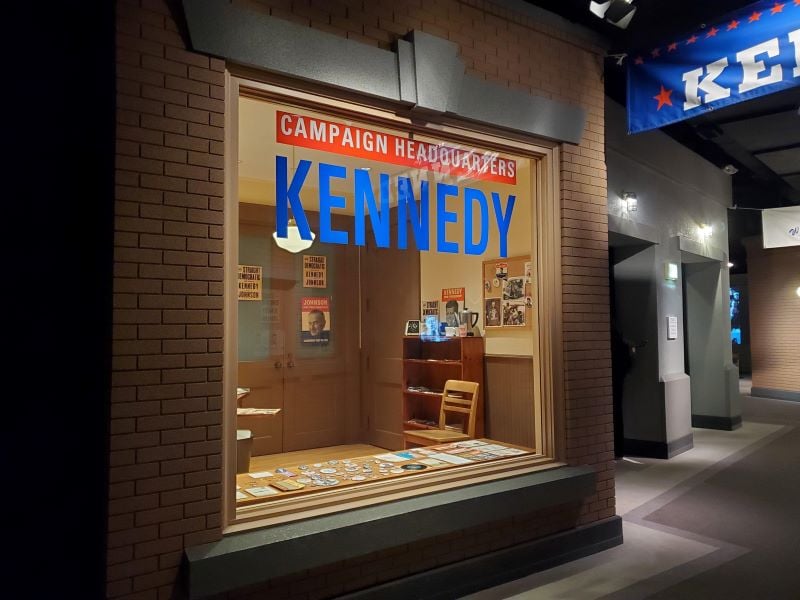
After purchasing a ticket and making your way through security, view a 20-minute film introducing JFK and covering his early life. From there, it’s onto the campaign trail! The first exhibit showcases the excitement and history of Kennedy’s 1960 Presidential Campaign, which featured the first-ever televised debate between Kennedy and his opponent, then Vice President Richard Nixon. This section of the museum is designed to resemble a small-town street, and features campaign memorabilia and a replica campaign office and television studio.
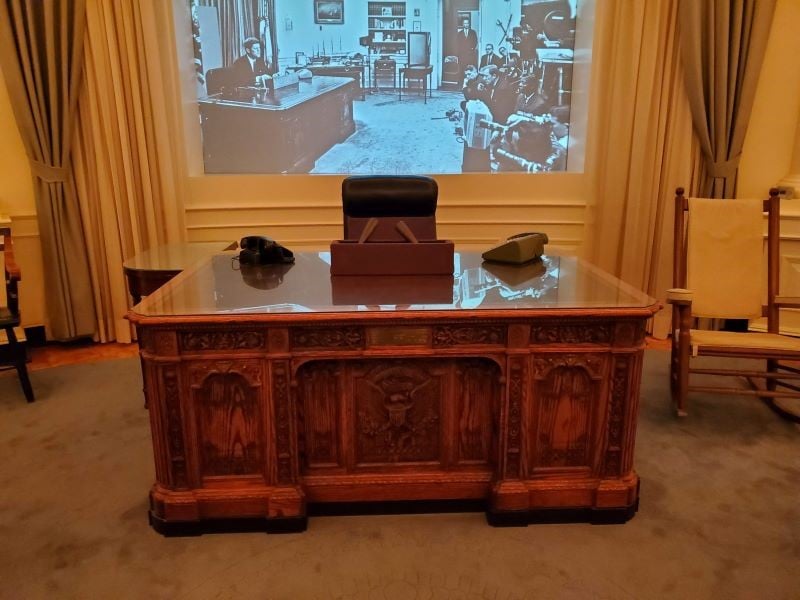
At the end of this exhibit, you turn a corner, and suddenly, you’re in the White House for exhibits focusing on the Kennedy Presidency. In a series of rooms designed to look like 1600 Pennsylvania Avenue, you can learn all about Kennedy’s relationship with the media, the space race, the Cuban Missile Crisis, and more. Ceremonial gifts to the Kennedys from foreign Heads of State line the walls, and at the end of the hallway, you’ll find a replica of the desk Kennedy used in his Oval Office – the famous Resolute Desk. Behind the desk, you can see footage related to the Civil Rights Movement, including Martin Luther King, Jr.’s 1963 “I Have a Dream” speech.
 The library celebrates much more than just JFK. The museum features exhibits on Attorney General Robert F. Kennedy, John’s younger brother, whose office and desk are recreated within the museum. The First Lady, Jaqueline Kennedy, was renowned for her work in historical restoration and preservation. She played a key role in reimagining the White House’s look and feel, and in developing the role the building plays in our culture today. The museum features original photographs, clothing, and even an honorary Emmy Award presented to her.
The final exhibit in the museum focuses on the Kennedy Administration’s lasting impact on the country and the world at large. Sections focusing on the Peace Corps (founded during the Kennedy Administration), the Kennedy Center Honors (distributed by the Kennedy Center for the Performing Arts in Washington, D.C.), and a part of the Berlin Wall, where Kennedy spoke in 1963.
 The exhibits exit into the museum’s iconic pavilion – a geometric glass structure that is as stunning inside as it is from the outside. The pavilion is empty except for 2 things – a quote from Kennedy’s inaugural address on its far facing wall, and an American flag hanging from the rafters. The sun-lit, panoramic space allows visitors to reflect on their experience at the museum before their journey ends. On the way out, don’t forget to stop by the Kennedy Café just off of the pavilion, and the museum’s gift shop.
In addition to the permanent attractions above, the museum regularly hosts special exhibits, tours, lectures, and private events. Check out their calendar to see if there is anything happening on the day of your visit. Behind the scenes, the museum operates as an important archive for documents and artifacts related to the Kennedy Presidency. On campus, you’ll also find the Edward M. Kennedy Institute for the United States Senate, which aims to teach visitors about the legacy, procedures, and importance of the governing body where John’s youngest brother Ted Kennedy served for over 40 years.
The museum is one of Boston’s many must-see attractions for anyone interested in history or culture. Start planning your trip, and sign up for our mailing lists to learn everything there is to see and do across the state today.